Flower Tea
Should you cover the lid when brewing flower tea in the office?
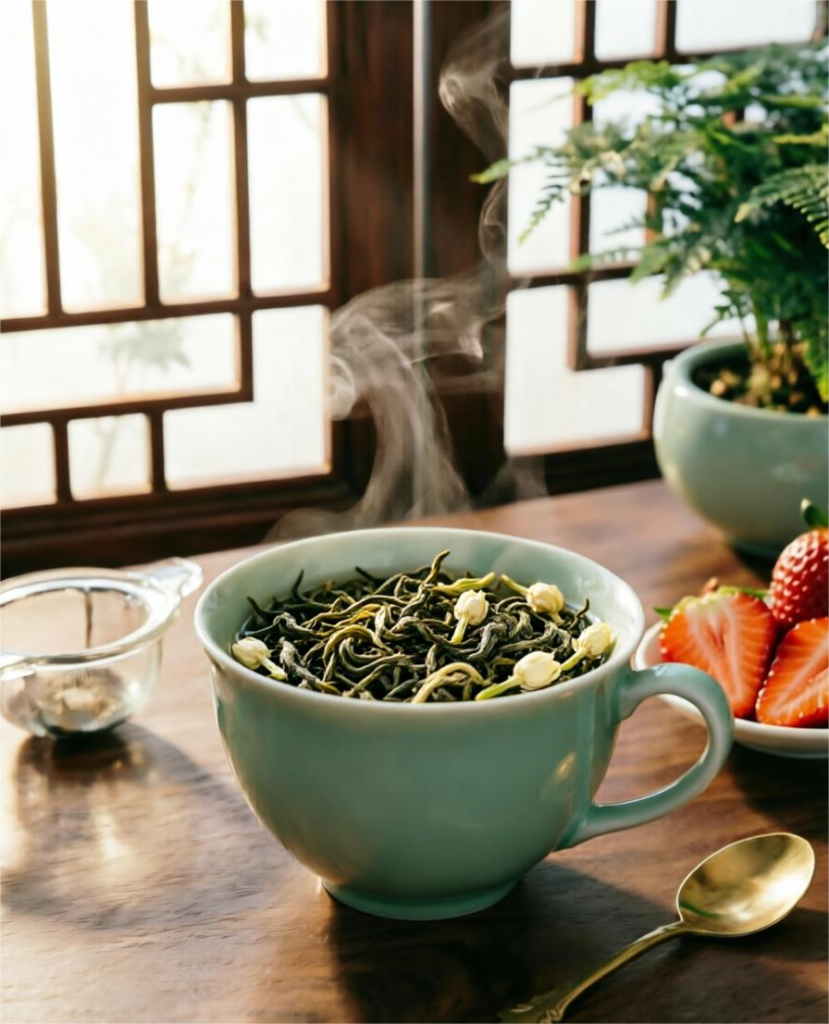
Last autumn, a friend gifted me a can of osmanthus oolong tea. The moment I opened the lid, the sweet fragrance of osmanthus hit my nose, and I felt my whole body relax. When I brewed it for the first time, I casually grabbed a handful and threw it into a mug. I poured in boiling water, covered the lid, and then went back to work. Ten minutes later, when I lifted the mug and took a sip, it was bitter. The tea was dark, and the refreshing aroma of osmanthus clung to the bottom of the mug, completely different from the smell when the tea was dry.
At that time, I thought to myself: What a waste of good tea leaves.
Later, I chatted with a friend who specializes in tea. She asked me the first sentence after hearing it, "Did you cover the lid?" I nodded. She said, "The secret to brewing scented tea lies in the lid."
When it comes to materials and tea sets, it's not necessarily the case that the more expensive, the betterLet's start with the tea set. I have a glass concentric cup given by a colleague. The outer layer is made of heat-resistant glass, and the inner layer has a filter with holes, which is particularly convenient for brewing flower tea. However, I found that if I use a purple sand teapot, the brewing method has to be adjusted - purple sand has good air permeability, and the pot wall has adsorptive properties. If this teapot is used to brew jasmine tea all year round, the aroma of the old tea will "steal the show", and the freshness and vitality of the flower tea will be compromised.
For beginners, I would actually recommend the white porcelain gaiwan or high borosilicate glass kettle. They don't absorb flavors, are easy to clean, and are affordable. You can easily find a suitable one for just a few dozen yuan.
Regarding water temperature, don't be superstitious about "boiling water brings out the aroma"Many flower tea packages state "brew with 85℃ hot water". I used to think this was just superstition, thinking that boiling water would work just as well. Later, I conducted a comparison experiment - using the same jasmine silver needle tea, one pot was brewed with boiling water, while the other was brewed after the water temperature had dropped to around 85℃.
The results are clear: the tea brewed in boiling water has a slightly yellowish color, with jasmine fragrance emanating, and a slightly bitter taste upon consumption; the tea brewed at 85℃ has a clear color, with a floral fragrance that rises up, and leaves a lingering sweetness sensation in the mouth after drinking.
The principle is actually not complicated - the aroma substances in flower tea are mostly low-boiling-point aromatic alcohols. If the water temperature is too high, they will "escape" immediately, and the excessive leaching of polyphenols from the tea leaves will result in a bitter taste. If you don't have a thermometer on hand, open the pot lid for about two minutes after the water boils, and it will be around 85-90℃.
The most important question: How do I use the lid?Returning to the "putting on the lid" issue mentioned at the beginning, my experience is that there are three situations:
The first type is high-aroma flower tea, such as jasmine tea and osmanthus oolong tea. After pouring the first infusion, do not cover the lid, allowing the floral fragrance to naturally rise with the hot steam. You can pour out the tea after about 15-20 seconds. If it is left to steep for too long, the aroma will become "cooked" and not fresh and vibrant enough.
The second type is compound flower tea with health-promoting ingredients, such as chrysanthemum and wolfberry, and dried orange peel Pu-erh. This type often requires a brief steeping to extract the effective components. You can cover the lid and steep for 3-5 minutes, but the time should not be too long, otherwise the bitter taste of chrysanthemum will overshadow the sweetness.
The third type is cold-brewed flower tea. In recent summers, I have been fond of using the cold-brew method - taking a sealed bottle, putting in tea leaves, injecting room temperature water, tightening the lid, and placing it in the refrigerator for 4-6 hours. Under low temperature conditions, the aroma releases slowly, and the floral fragrance is particularly refreshing, without any astringency at all.