Dark Tea
Dark Tea: A Mellow Flavor Distilled by Time
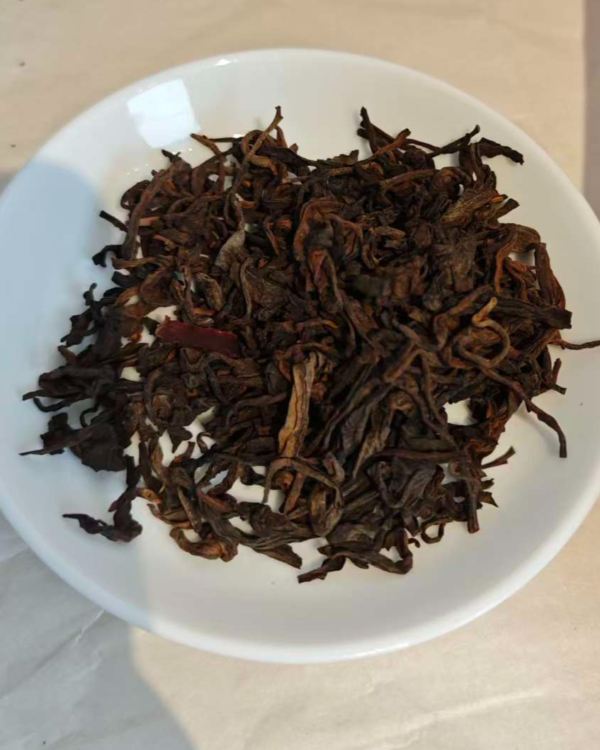
Among the six major tea categories, dark tea may be the most "unassuming" in appearance. It lacks the fresh, tender green of green tea and the glossy dark luster of black tea, yet with its unique post-fermentation process and the quality of "growing more fragrant with age," it occupies an irreplaceable position in tea culture. Today, let us step into the world of dark tea and explore the story behind this cup of "drinkable antique."
What Is Dark Tea?
Dark tea is named for the black appearance of the finished product and is one of the six major tea categories, belonging to the post-fermented teas. Its production process is unique, requiring multiple steps including fixation, rolling, pile fermentation, and drying, among which "pile fermentation" is the key stage that forms the quality of dark tea.
The history of dark tea can be traced back thousands of years. China has a long history of dark tea production, with Hunan and Yunnan being the most renowned. In Anhua, people's affection for tea is particularly deep—the custom of "tea with two meals out of three" is ingrained in the bones of the locals. The Tea Manual, written during the late Tang and Five Dynasties period, records "Qujiang thin slices, eighty pieces per catty," indicating that as early as the Five Dynasties period, tea from the Anhua area was already known to the world.
The Five Major Categories of Dark Tea
Chinese dark tea is rich in variety, mainly divided into five categories: Hunan Anhua dark tea, Yunnan ripe Pu'er tea, Hubei green brick tea, Guangxi Liubao tea, and Sichuan Ya'an Tibetan tea.
Hunan Anhua dark tea is an important member of the dark tea family, with the richest variety, described as "three tips, three bricks, and one roll." The "three tips" refer to Tianjian, Gongjian, and Shengjian—loose teas classified by the tenderness of the raw material. The "three bricks" refer to Fu brick tea, flower brick tea, and black brick tea. The "one roll" is the famous flower roll tea, also known as Qianliang tea. Qianliang tea is hailed as a "drinkable antique" and the "king of teas worldwide," and is one of the most complex dark teas to produce.
Yunnan ripe Pu'er tea is made from the fresh leaves of Yunnan large-leaf tea trees through a pile fermentation process. High-quality ripe Pu'er tea has a smooth mouthfeel, a deep red liquor color, and a distinctive aged aroma.
Hubei green brick tea is named for its shape, usually pressed into brick form with a dark greenish-black surface. It was first produced in Yangloudong. It was initially loose tea and only later developed into brick tea for ease of transportation.
Guangxi Liubao tea is produced in Wuzhou City. High-quality Liubao tea has a bright red liquor, and aged Liubao tea has a distinct betel nut aroma, which is its unique hallmark distinguishing it from other dark teas.
Sichuan Ya'an Tibetan tea has been popular in Tibetan regions since ancient times and is closely tied to the lives of Tibetan and northwestern ethnic groups. In Tibetan regions, where people eat much beef and mutton but little vegetables and fruit, drinking tea daily aids digestion while supplementing vitamins and minerals. Hence the saying in Tibetan regions: "Better to go three days without grain than one day without tea."
The Health Benefits of Dark Tea
Dark tea is rich in nutrients, most notably vitamins and minerals, as well as protein and amino acids. Research shows that dark tea offers health benefits in multiple aspects.
Regulating blood sugar is one of the notable benefits of dark tea. The tea polysaccharide complex in dark tea is an important component for lowering blood sugar, and its compositional activity is stronger than that of other tea categories.
In terms of regulating blood pressure, the unique theanine in dark tea can inhibit the rise in blood pressure by activating dopaminergic neurons. In addition, the caffeine and catechins in dark tea can relax the blood vessel walls, playing a role in blood pressure regulation.
Promoting digestion is also an important benefit of dark tea. The caffeine, vitamins, amino acids, phospholipids, and other substances in dark tea aid human digestion and help regulate fat metabolism. The stimulating effect of caffeine can further increase gastric juice secretion, thereby improving appetite.
However, though dark tea is good, attention must be paid to how it is consumed. People with insomnia should not drink dark tea right before bed, as the caffeine in dark tea excites the central nervous system and can worsen insomnia. Pregnant women should also avoid drinking too much strong dark tea.
How to Enjoy Dark Tea
Dark tea belongs to the post-fermented tea category and needs to be brewed with high-temperature water. Although it is relatively mild and resistant to steeping, it should not be soaked for too long, otherwise it becomes bitter and astringent. If brewed properly, the liquor is clear and the taste is mellow.
When brewing dark tea, first rinse the tea maker, fairness cup, and tasting cups with boiling water. Use about one-quarter of the vessel's capacity in tea leaves. The first infusion requires "washing the tea"—pour in boiling water to submerge the leaves, discard the liquor after 5–10 seconds. This step removes any stale storage odor and awakens the tea's character.
Pour in boiling water again, and after bringing to a boil, reduce to a gentle fire and simmer slowly for 3–5 minutes. Flower roll tea can be simmered 4–5 times; as the number of simmerings increases, the simmering time can be appropriately extended. The liquor should be bright orange-yellow, with a mellow, sweet, and moist taste, and a unique aroma of bamboo leaf, bamboo sheath, and glutinous rice.
When drinking dark tea, you can admire the layer of mist floating on the surface of the liquor in the cup. The liquor of dark tea is brilliantly red, with a faint, milky-white mist on the surface. The aroma of dark tea changes with each infusion. Smelling the changes in the tea's fragrance carefully is almost like being transported to bygone years.