黑茶
Yunnan: The Kingdom of Ancient Tea Trees and the Hometown of Pu-erh tea
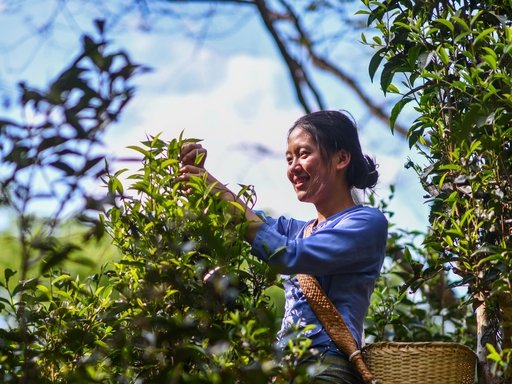
Yunnan, a land hailed as the "Kingdom of Ancient Tea Trees," is a vital birthplace of Chinese and even global tea culture. It not only boasts abundant tea tree resources but has also nurtured a unique ethnic tea culture, making it a truly major tea-producing province.
Four Core Production Regions, Each with Distinct Features
Yunnan's Pu'er tea is mainly produced in four major tea regions: Pu'er, Xishuangbanna, Lincang, and Baoshan. These regions are distributed across the middle and lower reaches of the Lancang River and Nujiang River systems, accounting for about 80% of the province's total tea planting area.
Xishuangbanna is internationally recognized by the tea world as the center of origin for tea trees, as well as the renowned birthplace of Pu'er tea and the starting point of the Ancient Tea Horse Road. Its ancient tea trees grow at elevations ranging from 760 to 2,429 meters, and it is home to famous tea areas such as Yiwu, Bulang Mountain, and the Ancient Six Tea Mountains. Tea varieties produced here, including Tianmen Mountain, Guafengzhai, and Laobanzhang, are celebrated throughout the tea world.
Lincang, as the native habitat of the world's tea trees, has tea gardens mostly distributed in the warm, humid, and mist-shrouded deep forests on both banks of the Lancang River. The tea tree resources here are extremely rich, and varieties such as Bingdao Old Village and Xigui Manglu Mountain are of outstanding quality and deeply loved by tea enthusiasts.
Pu'er City's Jingmai Mountain is located in Lancang Lahu Autonomous County, at an elevation of 1,000 to 1,700 meters, with annual precipitation of 1,800 millimeters. Here there is no scorching summer heat, no severe winter cold, and the climate is like spring all year round. The tea produced here, such as Jingmai and Fenghuang Wo, is of excellent quality.
Baoshan tea region is rich in tea germplasm resources and has been praised by experts as a "treasure house of tea variety resources." The Gaoligong Mountains still preserve tens of thousands of acres of artificially domesticated ancient tea tree communities, with tree ages verified to exceed a thousand years.
Ancient Tea Tree Resources, World-Renowned
Yunnan possesses globally unique ancient tea tree resources. In Bada Mountain, Menghai County, Xishuangbanna, a wild-type ancient tea tree was discovered standing 32 meters tall, estimated to be about 1,700 years old. In Bangwai Village, Lancang County, Pu'er City, a transitional-type ancient tea tree was found standing 11.8 meters tall, over 1,000 years old.
The most famous is an ancient tea tree in Jinxiu Village, Fengqing County, Lincang City. Standing 10.6 meters tall, it is the largest and oldest artificially cultivated tea tree discovered by humans to date. Locals estimate its age to exceed 3,200 years, and it is known as the "Jinxiu Tea Ancestor." These representative ancient tea trees—wild-type, transitional-type, and cultivated-type—provide strong evidence that Yunnan is the original home of the world's tea trees.
In September 2023, the "Cultural Landscape of Old Tea Forests of Jingmai Mountain in Pu'er" was successfully inscribed as a World Heritage Site, becoming the world's first tea-themed World Cultural Heritage site. This achievement is not only international recognition of Yunnan's tea culture value but also injects new vitality into the sustainable development of the local tea industry.
Ethnic Tea Culture, Deeply Rooted
Yunnan's tea culture is inseparable from the lives of its ethnic minorities. The Bulang, Dai, and other ethnic groups have lived on Jingmai Mountain for generations, believing in animism, Theravada Buddhism, and tea ancestor worship. According to Bulang belief, Pa Aileng was the first tribal leader to discover tea and is revered as their Tea Ancestor.
The De'ang people are known as "children of tea" and "ancient tea farmers," and tea holds an irreplaceable place in their lives. The De'ang people emphasize that "tea conveys meaning"—when visiting relatives and friends or proposing marriage, tea must be presented as a gift. A party at fault need only send a package of tea to seek forgiveness.
The De'ang people's sour tea production technique has been successfully inscribed on UNESCO's Representative List of the Intangible Cultural Heritage of Humanity. This sour tea is made through processes including fixation, rolling, and anaerobic fermentation. Edible tea is generally fermented for about two months, while drinking tea must be fermented for four to nine months. The fermented tea produces abundant probiotics that can effectively improve gastrointestinal function.