白茶
Wangong Bee Pond Yunnan Ancient Tree White Tea: Wild Honey Aroma from Yiwu Primeval Forest
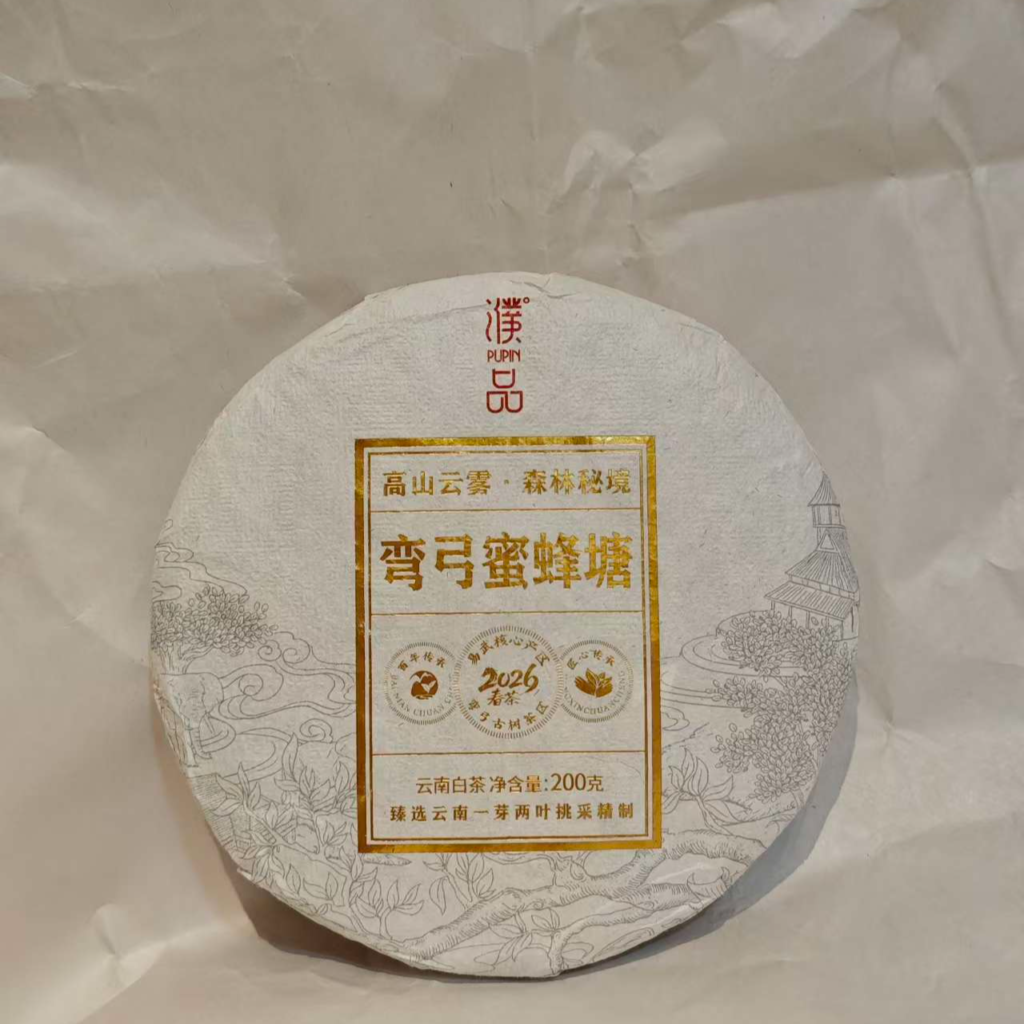
When people mention Wangong in Yiwu, raw Pu’er tea is usually the first thing that comes to mind. Yet few know that deep within Wangong's state-owned forest lies Bee Pond, this hidden and lesser-known terroir. Using fresh spring buds and leaves from ancient trees and traditional white-tea craftsmanship, a Yunnan ancient-tree white tea with rich wild honey aroma is created — Wangong Bee Pond Yunnan White Tea.
The name Bee Pond carries its own story. This community of tall ancient trees is tucked deep in primeval forest. Wild flowers bloom year-round with abundant nectar, drawing swarms of wild bees to dwell among the trees, hence the name Bee Pond. Sitting at an altitude of 1450–1600 meters shrouded in mist and clouds, these ancient trees root in humus soil. Tea plants grow symbiotically with trees and vines with almost no human interference. Located in the Mansa zone of the Six Great Ancient Tea Mountains, it shares the same small state-owned forest plot cluster as Bohetang. Most ancient trees here are over 300 years old. With limited annual yield, it has become a sought-after niche mountain among tea lovers in Yiwu in recent years.
Craft: No pan-firing, no rolling, sun withering to preserve original forest character
Unlike Fuding white tea, Bee Pond white tea uses spring flush from Yunnan large-leaf ancient trees. The thick large leaves contain richer internal substances, requiring a longer withering period. Following the traditional craft of Yunnan white tea: harvest the first-spring buds and leaves, sun-wither them and dry naturally under sunlight. **No pan-firing, no rolling, no fixation**. This locks in the innate forest honey charm of fresh leaves to the maximum without artificially altering its aromatic profile.
Without damage from high heat, the tea’s natural nectar fragrance and woodland essence are fully retained — this is the most captivating trait of Bee Pond white tea.
Dry Leaves, Liquor & Tasting Profile
Dry leaves: Long, stretched tea strips mixing buds and leaves. Buds are covered with fine silvery-white hairs, with dark green base tones dotted with light brown, the signature appearance of spring tea from ancient forest trees. A strong wild honey scent can be detected simply by smelling the dry tea, blended with subtle woodland floral notes.
Liquor: Once brewed, the tea liquor takes on a translucent pale honey-amber hue, glossy and bright with no cloudiness, resembling diluted wild honey water.
Aroma: Dominated by full and long-lasting wild honey fragrance. This sweetness is not artificially added, but native honey notes developed as tea bushes absorb nectar from mountain blossoms. It is layered with elegant forest florals and faint soft tropical fruit sweetness reminiscent of lychee. Fresh tea tastes bright and lively. With storage, its aroma gradually transforms into dried fruit and candied sweetness with evolving layers.
Taste: Smooth, mellow and sweet upon entry with a thick, delicate mouthfeel, embodying the signature “gentleness” of Yiwu tea. Bitterness and astringency are extremely low; sweetness arrives almost instantly. After swallowing smoothly, continuous salivation develops across both cheeks, paired with restrained and steady mountain forest energy.
Its biggest difference from Fuding white tea: Fuding white tea is clean and light, while Bee Pond ancient-tree white tea has a fuller body, richer honey aroma, stronger tea essence and outstanding infusion endurance. It performs well not only in quick gaiwan brewing but also cold brewing, thermos slow steeping and simmering, each method bringing out distinct flavours.
Tasting Experiment: How Water Temperature & Vessels Shape Bee Pond White Tea's Flavour
This inspired our blind-tasting video. Using the exact same Wangong Bee Pond white tea, merely changing the brewing water temperature or vessel creates perceptible shifts in honey aroma, sweetness and mouthfeel detectable by sight and taste.
Brewed with lower-temperature water, floral notes stand out with gentle, clean sweetness. Boiling hot water unlocks deep honey fragrance and wild forest character for a full-bodied liquor.
Differences in heat conduction and air permeability among various brewing vessels also modify the tea infusion. Even seasoned tea masters can be confused by these subtle flavor changes during blind tasting and make misjudgements.
This is the fun of ancient tree white tea: tea itself is the protagonist, yet water temperature and brewing vessels act as keys to unlock its diverse flavor expressions.